From collected waste to certified resin
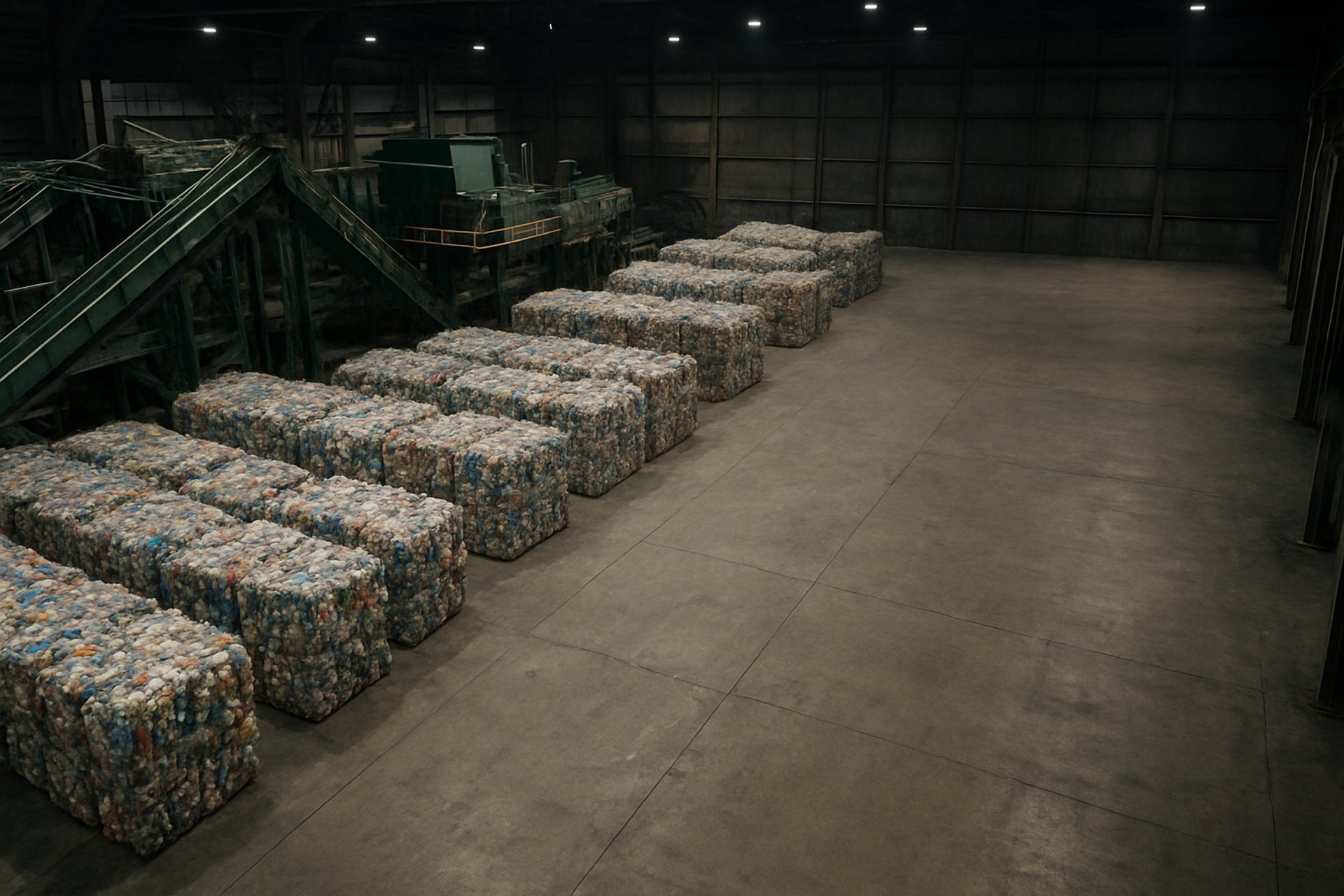
Every load Kavya receives is tracked through seven engineered stages. Resin type, contamination level, and output grade are verified at each handoff—not assumed.
Engineered from load-in to certified output
01 — Collection
02 — Segregation
03 — Cleaning
Material is sorted by resin type—PET, HDPE, LDPE, PP, PVC, multilayer—using density separation and manual line inspection. Mixed or ambiguous loads are routed for secondary sort.
Industrial scrap, post-consumer plastic, and packaging waste arrive by load at the facility. Each intake is logged by source, resin category, and estimated contamination grade.
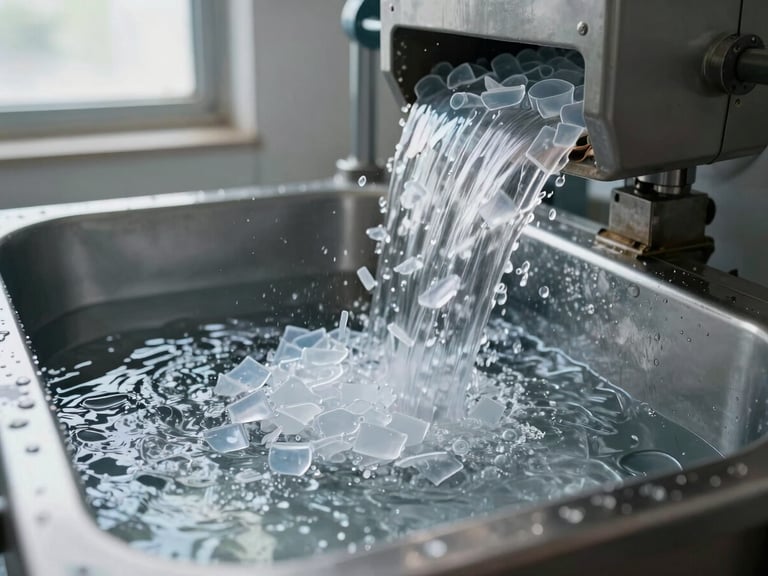
Sorted material passes through wash lines calibrated per resin. Labels, adhesives, and surface contaminants are removed before any mechanical processing begins.
04 — Shredding
05 — Processing
06 — Reprocessing
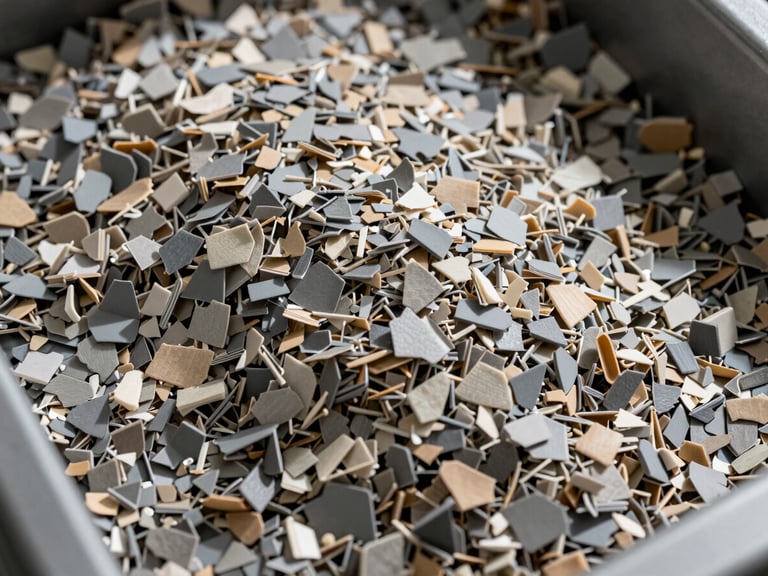
Clean material enters industrial shredders sized to the target output specification. Flake uniformity at this stage determines melt consistency downstream.
Shredded flake is screened for particle size, dried to target moisture levels, and held until resin-specific processing parameters are confirmed for the next stage.
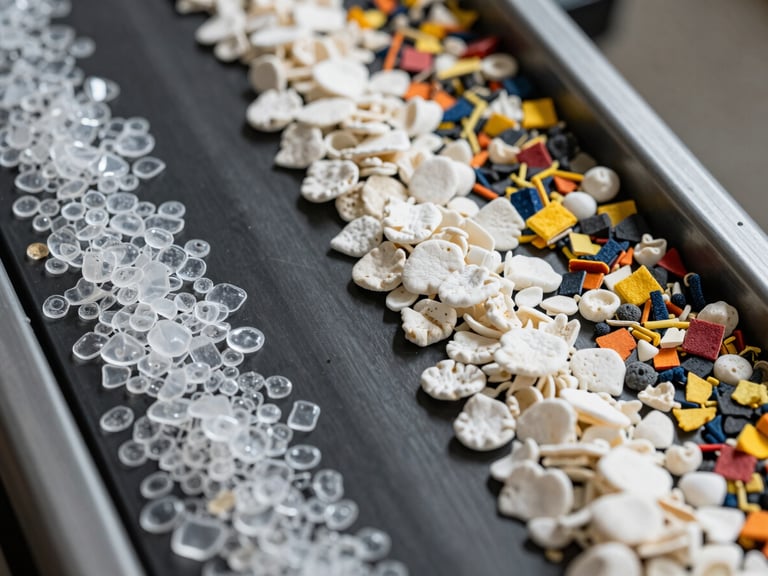
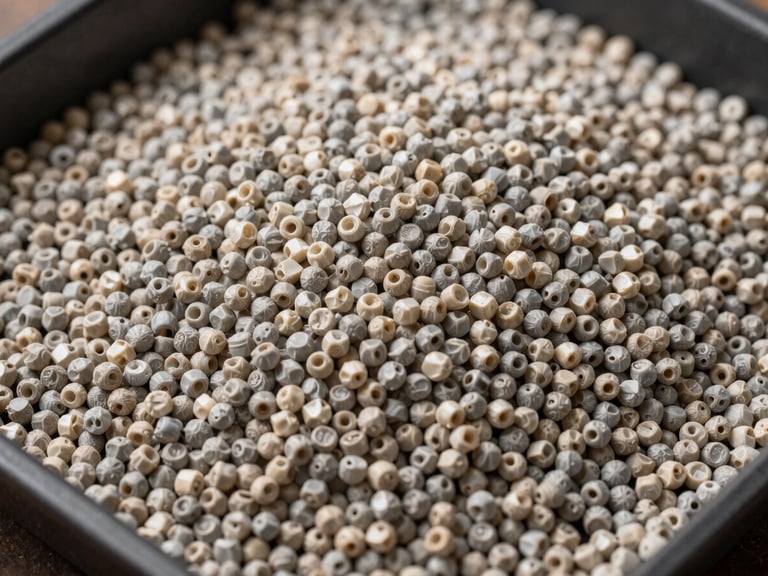
Flake enters the extruder at controlled temperature and pressure. The melt is filtered, degassed, and strand-cut into uniform pellets with measurable density and melt flow index.
07 — Certified Manufacturing Output
Finished pellets are batch-tested, graded, and documented as certified recycled feedstock. Output leaves the facility traceable from source load to resin specification.

Purity is built at every handoff
Segregation: resin-specific sorting
Mixing resin types destroys output quality. Each incoming load is manually and mechanically sorted to single-resin lanes before any water or heat touches the material.
Film thickness, colour grouping, and density float-sink tests determine final lane assignment. No ambiguous material advances unsorted.
Cleaning: contamination removed before shredding
Wash lines run at temperatures and detergent concentrations matched to each resin. Labels, inks, and adhesive residue are stripped at this stage—not compensated for later.
Post-wash material is inspected for residual contamination before advancing. Clean input is non-negotiable for consistent melt flow index at extrusion.
Shredding and processing for uniform flake
Shredder blade gap and screen mesh are set per resin to produce flake within a defined particle size range. Uniform flake feeds predictably into the extruder.
Moisture content is measured after drying. Flake that falls outside spec is re-routed—not blended forward to mask variance.
Reprocessing into documented pellet output
The extruder runs at resin-specific barrel temperatures. Melt passes through a filtration stage before pelletising. Each batch carries a melt flow index and density record.
Finished pellets are batch-sampled before bagging. Output documentation links each bag to its source load, resin grade, and process run date.
Industrial waste arrives in tonnes. It leaves as documented feedstock.
If your operation generates plastic scrap that needs a verified processing partner, request our full process documentation and material acceptance criteria.